
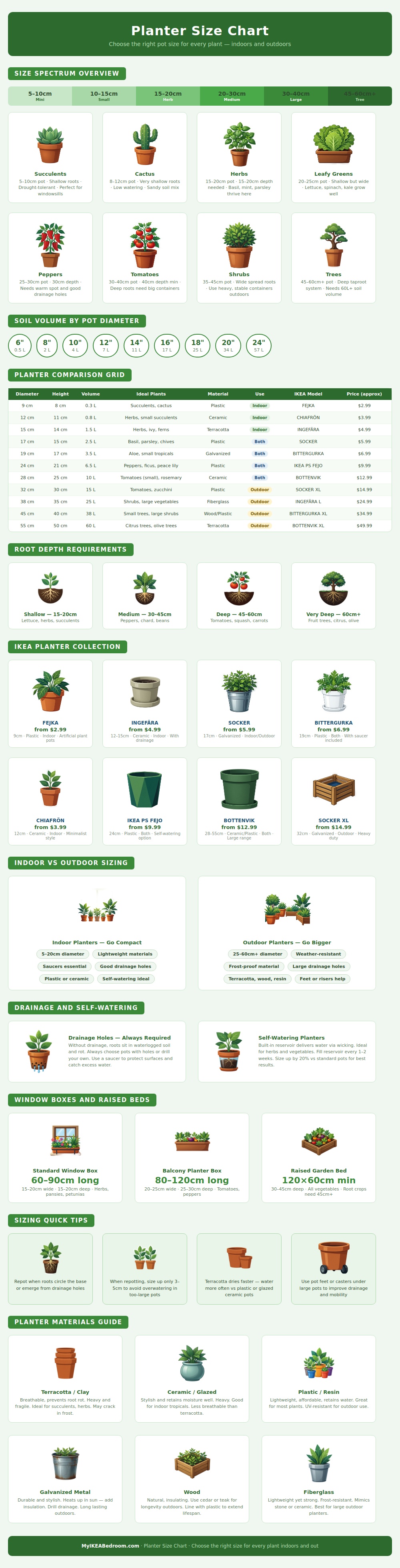
Choosing teh right size for planter requires an understanding of the relationship between the size of the planter and the needs of the plant that will be growing within that planter. The size of the planter will have an impact on the amount of room that the roots of the plant have to grow, and the amount of room that the roots of the plant have to grow will have an impact upon whether or not that plant is healthy or struggling with it’s growth. The size of the planter that is chosen for the plant must be matched to the needs of the roots of that plant; too small a planter will create issue for the roots of the plant, and too large a planter will also create issues for the plant.
Planter sizes range from mini pots to large containers, and each size serve a specific purpose for the type of plants that you’re going to grow within those containers. Mini pots are best for plants like succulents and cacti, as the roots of those types of plants remain shallow and dont require much of the soil to grow. Medium sized planters are best for herb and leafy green plants, as those types of plants do require more soil than succulents and cacti, but do not require deep roots to reach the ground.
How to Choose the Right Planter Size
Large planters are best for plant with deep root systems, like deep rooted vegetables or shrubs. One of the factors to consider when choosing the size of the planter is the volume of soil that will be contained within the planter. The soil within the planter will control the amount of moisture that the soil can hold, which will control how often the plant should be watered.
Small volumes of soil will dry quick, which is helpful for drought tolerant plants but can create problems for those that require more regular watering. Large volumes of soil will hold the moisture for longer periods of time, which provides benefit to the plants in that it allows for the roots to spread out. However, the large volume of soil can also lead to problems for the plant if the planter is too large for the plant; the soil will remain wet for too long and may become soggy, leading to root problem for the plant.
Root depth is another of the factors to consider when choosing the size and shape of the containers in which a plant will grow. Plants with shallow roots, such as lettuce and herbs, will not require deep root planters. Deep rooted plants, such as tomatoes and squash plants, will require deep planters to provide their roots the depth they need to both grow and remain anchored to the plant.
Drainage is another necessary component of any planter. Without drainage, the plant’s roots will sit in wet soil for too long, which could lead to rot of the roots of the plant. Self watering planters do include a reservoir to provide water to the plant roots gradual.
Self watering planters, however, will require more soil volume than standard planters. The environment in which the plant is to be grown will have an impact upon the type of planter that is required for that plant. Indoor planters may be lighter in weight than outdoor planters, for example.
Outdoor planters will need to withstand the elements, including wind and changes in the temperatures of the environment. In this case, outdoor planters should include larger drainage holes to allow for the soil to drain when the weather is rainy, for instance. An additional consideration to the type of planter for the plant is the material for the planter.
Terracotta planters will allow the moisture in the soil to escape from the planter; thus, terracotta planters will require more frequent watering. Plastic and glazed ceramic planters will hold the moisture in the soil for longer periods of time, thus requiring less frequent watering. However, because plastic and glazed ceramic planters will hold the moisture in the soil for longer periods of time, those planters require that you monitor the soil to ensure it isnt too soggy.
Another consideration is the planter into which the plant will be moved. You should not rush the plant into the largest available planter. Instead, incremental growth of the plant within its containers can occur; the plant may only be placed into a container that is more large than the current container for the plant.
The plant will need to be moved into a larger container if the roots are beginning to begin circling the base of the plant or if the roots are coming out of the drainage holes of the container. By providing a planter that appropriately matches the needs of the plant, that plant will be able to become more productive and will appear more settled in its container.
