Fabric Weight Calculator
Estimate textile weight from GSM or ounces per square yard, then plan cut yardage, total area, lining layers, seam and shrink allowance, bolt layout, and packed storage weight.
Load a common textile project, then adjust the cut size, fabric density, layers, and bolt width to match your actual cloth.
Cut and weight breakdown
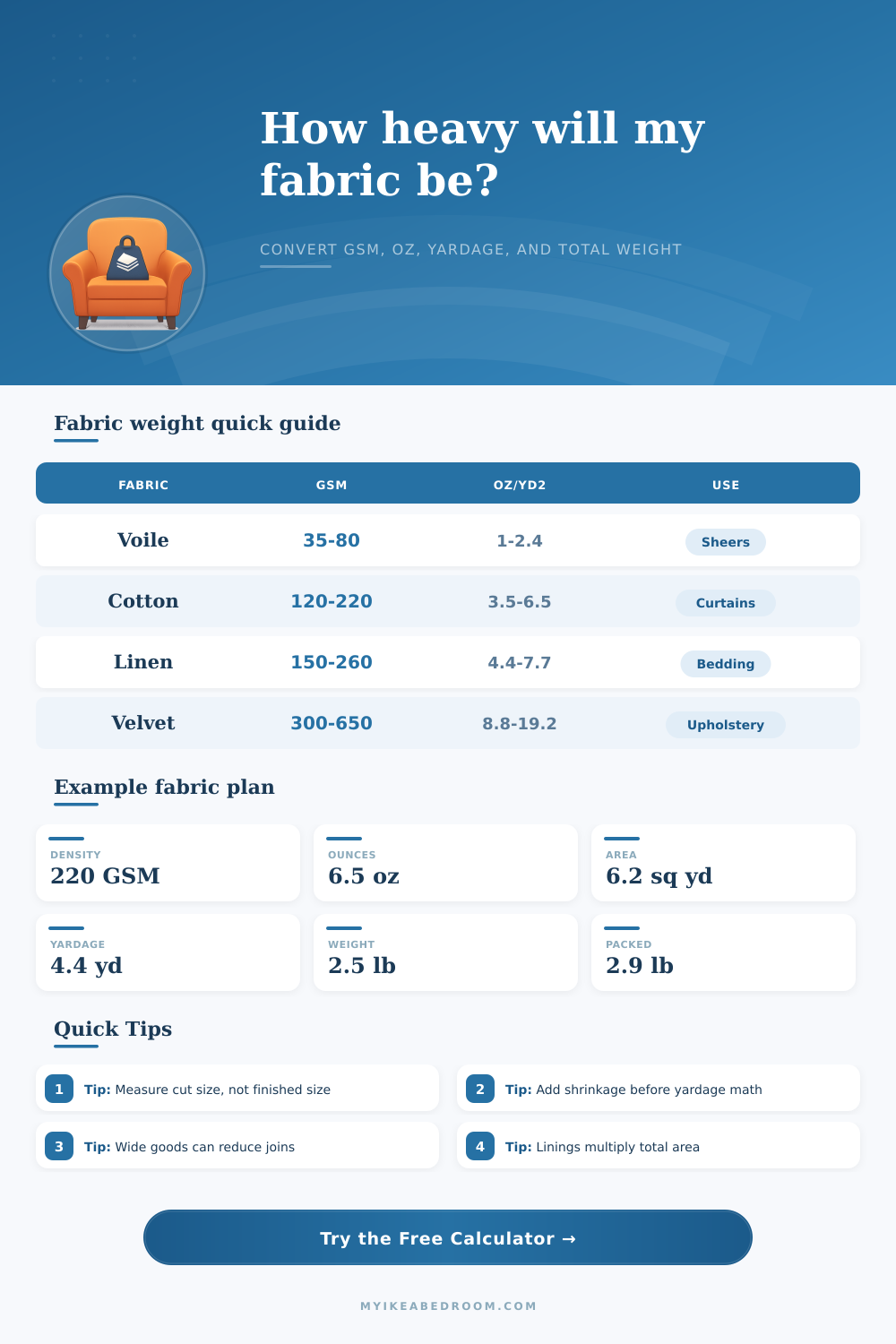
| Fabric family | Typical GSM | Typical oz/yd² | Planning use |
|---|---|---|---|
| Sheer voile or organza | 35 to 80 | 1.0 to 2.4 | Light curtains, canopy panels, layered window treatments. |
| Quilting cotton or poplin | 120 to 180 | 3.5 to 5.3 | Bedding details, liners, lightweight covers, craft panels. |
| Linen and medium cotton | 150 to 260 | 4.4 to 7.7 | Duvet covers, table textiles, drapery, cushion faces. |
| Canvas, denim, twill | 260 to 450 | 7.7 to 13.3 | Slipcovers, headboard wraps, utility covers, cushions. |
| Velvet and dense upholstery | 300 to 650 | 8.8 to 19.2 | Chairs, benches, lined curtains, structured fabric panels. |
| Conversion | Formula | Example | Use when |
|---|---|---|---|
| GSM to oz/yd² | GSM divided by 33.9057 | 220 GSM = 6.49 oz/yd² | A pattern or store lists ounces instead of grams. |
| oz/yd² to GSM | oz/yd² multiplied by 33.9057 | 10 oz/yd² = 339 GSM | You need metric fabric weight for shipping or storage. |
| Square yards to square meters | sq yd multiplied by 0.836127 | 6 sq yd = 5.02 m² | You are comparing fabric area across unit systems. |
| Yards to meters | yards multiplied by 0.9144 | 5 yd = 4.57 m | Bolt length is sold or stored in metric units. |
| Lining setup | Area multiplier | Weight effect | Typical project |
|---|---|---|---|
| No lining | 1.0x | Face fabric only | Simple sheers, covers, lightweight panels. |
| Single lining | 2.0x | About doubles area if same rating | Bedroom curtains, duvet covers, cushion shells. |
| Double lining | 3.0x | Triples area before packing | Interlined drapes or padded textile panels. |
| Triple lining | 4.0x | Heavy handling load | Blackout plus interlining plus face fabric. |
| Bolt width | Best fit | Layout note | Common fabric |
|---|---|---|---|
| 44 to 45 in | Quilting and apparel cuts | Narrow home panels often need more lengths. | Cotton, poplin, craft prints. |
| 54 in | Upholstery and drapery | Works well for cushions, chairs, and many curtain panels. | Velvet, canvas, twill. |
| 60 in | Wide bedding and covers | Can reduce seams on duvet, headboard, and slipcover work. | Linen, denim, outdoor fabric. |
| 108 to 118 in | Extra-wide sheets | Useful when avoiding center seams matters. | Backing, sheeting, quilt backs. |
Light layers
35 to 120 GSM
Best for sheers, overlays, dust covers, and projects where bulk should stay low.
Everyday home cloth
120 to 260 GSM
Common for cotton curtains, linen bedding, table textiles, and washable covers.
Structured covers
260 to 450 GSM
Useful for slipcovers, seat cushions, headboards, tote-weight panels, and denim wraps.
Heavy upholstery
450+ GSM
Dense velvet, blackout, wool blend, and upholstery cloth need more storage support.
Fabric weight measure the amount of material pack into a specific area. The fabric weight is a necessary factor to consider when planning a sewing project. Many people will describe the fabric weight as either light or heavy, but fabric weight are a precise measurement.
One of the common measurements for fabric weight is the measurement of grams per square meter (GSM). This measurement determine the weight of the grams of fabric within one square meter of the fabric. In the United States, ounces per square yard is also used to describe the fabric weight.
How Fabric Weight Affects Your Sewing Project
However, the two measurements is describing the same fabric weight. When calculating the amount of fabric require for a sewing project, you must account for several factors. One of the factors are the seam allowances.
Seam allowances are the amount of inches of fabric that is folded inward to avoid the fabric fraying. The shrinkage of the fabric is another consideration. Shrinkage occur when fabrics with natural fibers such as cotton or linen is exposed to hot water or a steam iron.
If shrinkage isnt accounted for when measuring the fabric, the finished item will be smaller than the original measurements of the fabric. Another of the factors that must be accounted for is the amount of lining that you will add to the fabric. For example, if a fabric requires a blackout lining for the lining layer, the weight of the fabric will nearly double.
This increase in the weight of the fabric may require strong curtain rods and hooks of a different type. The width of the fabric bolt is another factor to consider when calculating the amount of fabric require for a project. Fabric is manufactured in standard bolt widths (such as 44 inches or 54 inches), but your project may require a width that is more larger than the standard bolt width for fabric.
In this case, you will have to sew multiple widths of fabric together to create join. Sewing multiple widths of fabric together will increase the amount of time you will spend sewing the project together. Additionally, sewing multiple widths of fabric together will increase the amount of yardage and the weight of the project.
The weight of the fabric is not the only consideration when managing the logistics of your project. There is also the consideration of the weight of the fabric when it is ship. The weight of the textile is only one part of the shipping weight of the fabric.
The shipping weight also include the weight of the cardboard roll core and the weight of the protective wrapping in which the textile is ship. When determining the weight of the fabric, make sure to use the shipping weight if determining the cost of shipping the fabric or if determining if it will fit in a vehicle. Choosing the correct weight of fabric for the project that you are create is necessary to ensure that the project will function as correct as possible.
For instance, sheer voile fabric is very thin and may sag when used to create a canopy for a structure. Additionally, upholstery velvet is very heavy and may cause the person wearing a summer dress made of this fabric to overheat. Reference tables can be used to compare the weight of the fabric that you are choosing to the different weight of common textiles.
These tables can help you to determine whether or not the weight of the fabric is appropriate for your project. By accounting for seam allowances, shrinkage, the number of layers of lining that you will use in the project, and the width of the fabric bolts, you will know the exact amount of fabric that you will need to purchase.