
Bunk beds is pieces of furniture that allow for two bed to be placed vertically on one bed frame. Bunk beds are used to save space in a bedroom. When choosing a bunk bed for a bedroom, it is important to consider several differents factors.
Some of these factors includes the configuration of the bunk bed, the size of mattress, the height of the ceiling in the bedroom, and the safety requirement of the bunk bed. In each case, it is important to ensure that the bunk bed will function correct in the given bedroom by performing measurements of the room prior to installation of the bunk bed. Bunk beds can be configured in a variety of way.
How to Choose a Bunk Bed
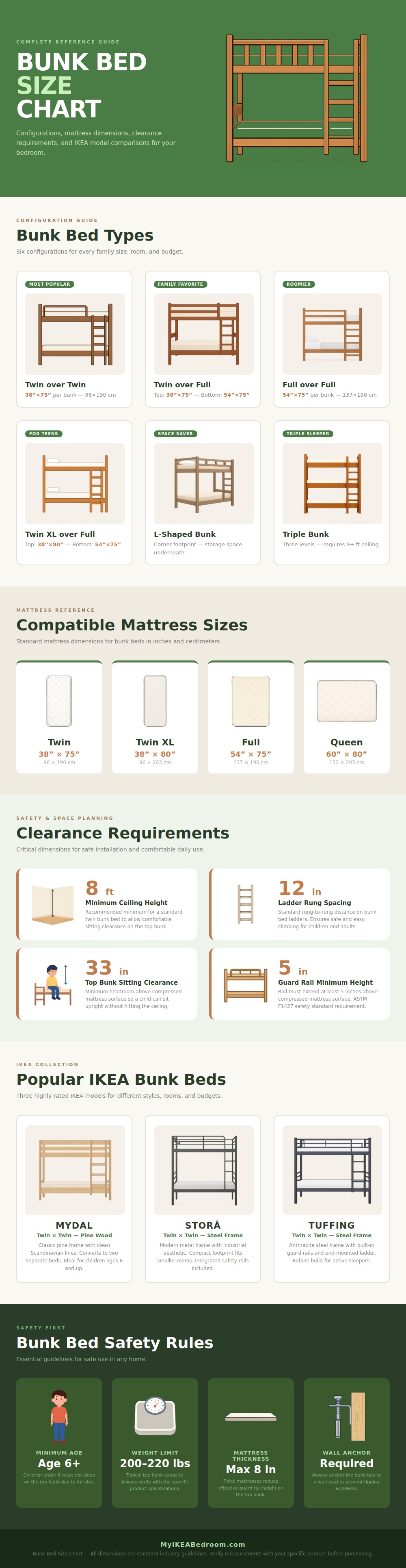
Some bunk beds has twin beds on each bunk; these are referred to as twin-over-twin bunk beds. Because each bed is relatively narrow and take up little space in the bed frame, people often use these bunk beds in small bedrooms. Other bunk beds feature a twin bed on top of a full bed; these are called twin-over-full bunk bed.
These bunk beds often provide more sleep space for those who would like to use the lower bunk bed. Full-over-full bunk beds are another type of bunk bed, and older children or teenagers who requires more sleeping space on each bed frame often use these bunk beds. Bunk beds can also have an L shaped configuration; these bunk beds are often used in corners of the bedroom so that there is more space for other furnitures.
Finally, there are also bunk beds that feature three sleeping space; these are called triple bunk beds. However, because the bunk bed takes up a great deal of vertical space, you must consider the height of the ceilings in the bedroom prior to installation of a triple bunk bed. Another consideration of bunk beds is the size and type of the mattresses that will be placed into the bunk bed.
The mattress should be the correct width for the bed frame; if the mattress is too wide it will extend beyond the sides of the bunk bed. Additionally, you should consider the thickness of the mattress; if a mattress is too thick the headroom for the individual who sleeps on the top bunk will be reduced. If there is not enough head room for that individual, they may hit the ceiling when sleeping; low-profile mattresses are often the bestest choice for bunk beds.
Another consideration prior to installation of a bunk bed is the layout of the room. You should measure the height of the ceiling in the room; if the bunk bed is too high for the ceiling the installation of the bunk bed will not function correct. The floor space in the room should also be measured to ensure that the bunk bed does not take up the space necessary for other furniture or to exit the bedroom.
Finally, the placement of the ladder should be considered to ensure that it is easy to climbing to the top bunk. Bunk beds are often made of wood or metal. One advantage of wooden bunk beds is that they can often be separated into two individual bed.
Wood bunk beds are often made of pine. Metal bunk beds are often made of steel; metal bunk beds are often more durable but take up less space in the bedroom. Each of these materials can be used for bunk beds; the choice of material is dependent upon the need of the room.
Safety is one of the most important consideration of any bunk bed. Any children under the age of six should not use bunk beds; these young sleepers lack the balance necessary to use such a bed. You should consider the weight capacity of the bunk bed; adding the sleepers and the weight of the mattresses should not exceed the weight capacity of the bunk bed.
Additionally, the bunk bed should have guard rails on the top bunk and the rails should be high enough to prevent the sleepers from falling out of the bed. Finally, the bunk bed should be anchored to the wall to prevent it from falling on the sleepers.
