Step geometry planner
Stair Tread and Riser Calculator
Balance equal risers, preferred tread depth, total run, pitch, and stringer length for stairways that feel deliberate from the first step to the landing.
1Preset stair scenarios
2Step inputs
Set the overall rise, the riser you want to target, and the tread depth you would like to walk on. The calculator adjusts the step count to equalize every rise.
Full stair breakdown
Geometry
Fit Check
3Stair profile comparison
4Reference tables
5Layout tips
To design a staircase, a person must determine the proper relationships between the riser height and tread depth. The riser height are the vertical distance between steps. On the other hand, the tread depth is the horizontal distance of the areas of the step where a person places there foot.
If the riser height is too tall, it will be difficult for the individual to climb the stairs. Additionally, if the riser height is too short, it will feel incorrect to an individual when walking up the stairs. Lastly, if the tread depth is too shallow, an individual may experience instability when walking on the stairs.
How to Make Safe and Comfortable Stairs
To ensure that stairs are comfortable for individuals to walk on, there is a specific formula that a person can use. The formula requires that a person multiply the riser height by two and add the tread depth to determine if the riser and tread depth are comfortable to an individual. If the resulting value is at least 25 inches, then it is comfortable for an individual to use the stairs.
Additionally, if an individual determines that the stairs are comfortable, the brain will not encounter any surprise while climbing the stairs. Another important measurement for stairs is the total rise of the stairs. This will determine how many risers and treads will be needed for the staircase.
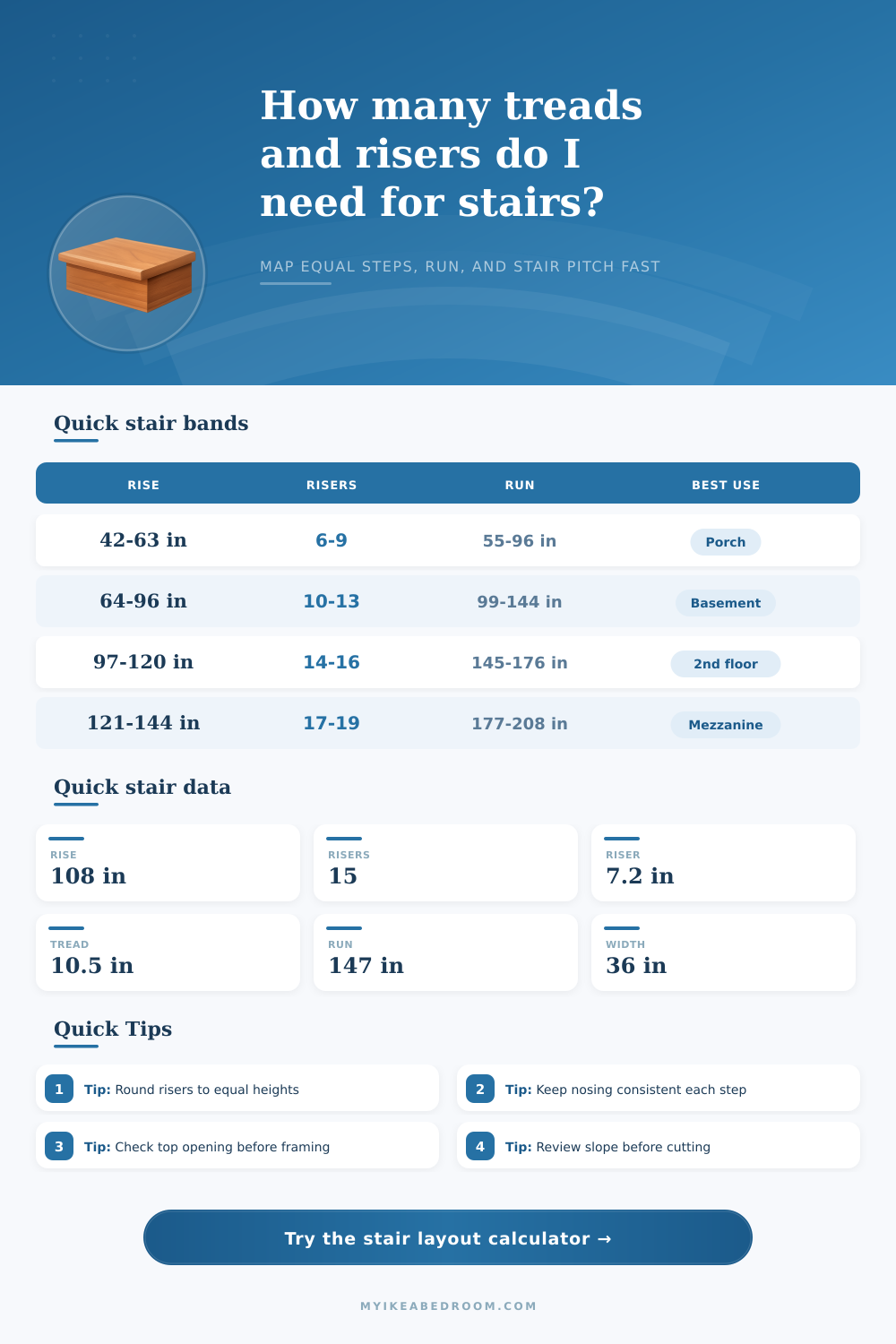
For instance, if the total rise is nine feet and the riser height is seven inches, the number of risers needed will be approximately 15 riser. However, if the riser height is 7.5 inches, the staircase will only need 14 risers. A steeper slope will take up more space within the floor that is being framed for the staircase.
Thus, an individual must frame the staircase prior to construction. Depending on the type of stairs, different measurements is required. For stairs within a building, the riser height must not exceed 7.75 inches in height.
Additionally, the tread depth should be at least 10 inches deep. Stairs used for service areas, such as a basement, can be steeper with a rise of up to eight inches. Indoor stairs within the building have a tread depth of at least 10 inches.
Outdoor stairs may need to be wider to provide more grip for individuals with wet shoes. Lastly, attic ladders will have steeper angles because they will take up less space within the building. Nosing projection is the depth of the stairs that protrude beyond the riser.
This increase the depth of the tread depth without increasing the total run of the staircase. The nosing projection should be the same for each stair on the staircase. If the nosing projection for each stair is not the same, it will create a stumbeling feeling when walking on the stairs.
Additionally, if an individual does not account for the thickness of the flooring for the stairs, it is possible for the top tread to be too high and the bottom tread may feel like it is recessed. The last important measurements are the slope angle of the staircase. Most staircase slope angle will be between 35 and 38 degrees.
This ensures that the staircase takes up less space in the building while allowing individuals to move with heavy objects on the stairs. If the slope angle is steeper than 42 degrees, it will be difficult for individuals to climb the stairs, especially if they are moving heavy boxes. The stair opening that is present within the floor that is to be framed for the stairs must be long enough to ensure that an individual does not hit their head on the stairs or the handrails of the staircase.
Additionally, the staircase should include a one-inch landing where the stairs meet the floor at the top of the flight. If an individual ignores the walking line, or the area two inches from the nosing of the stair where an individual places the sole of their foot, it is possible for the depth of the staircase to feel smaller than it appears. Thus, an individual should of used precise measurement to build the staircase to ensure it is both safe and functional.