🪴 Plant Pot Drainage Hole Calculator
Calculate the ideal number, size, and total drainage area for any plant pot or container
Drainage Ratio
Drainage Ratio
Drainage Ratio
Drainage Ratio
Drainage Ratio
Drainage Ratio
Drainage Ratio
Drainage Ratio
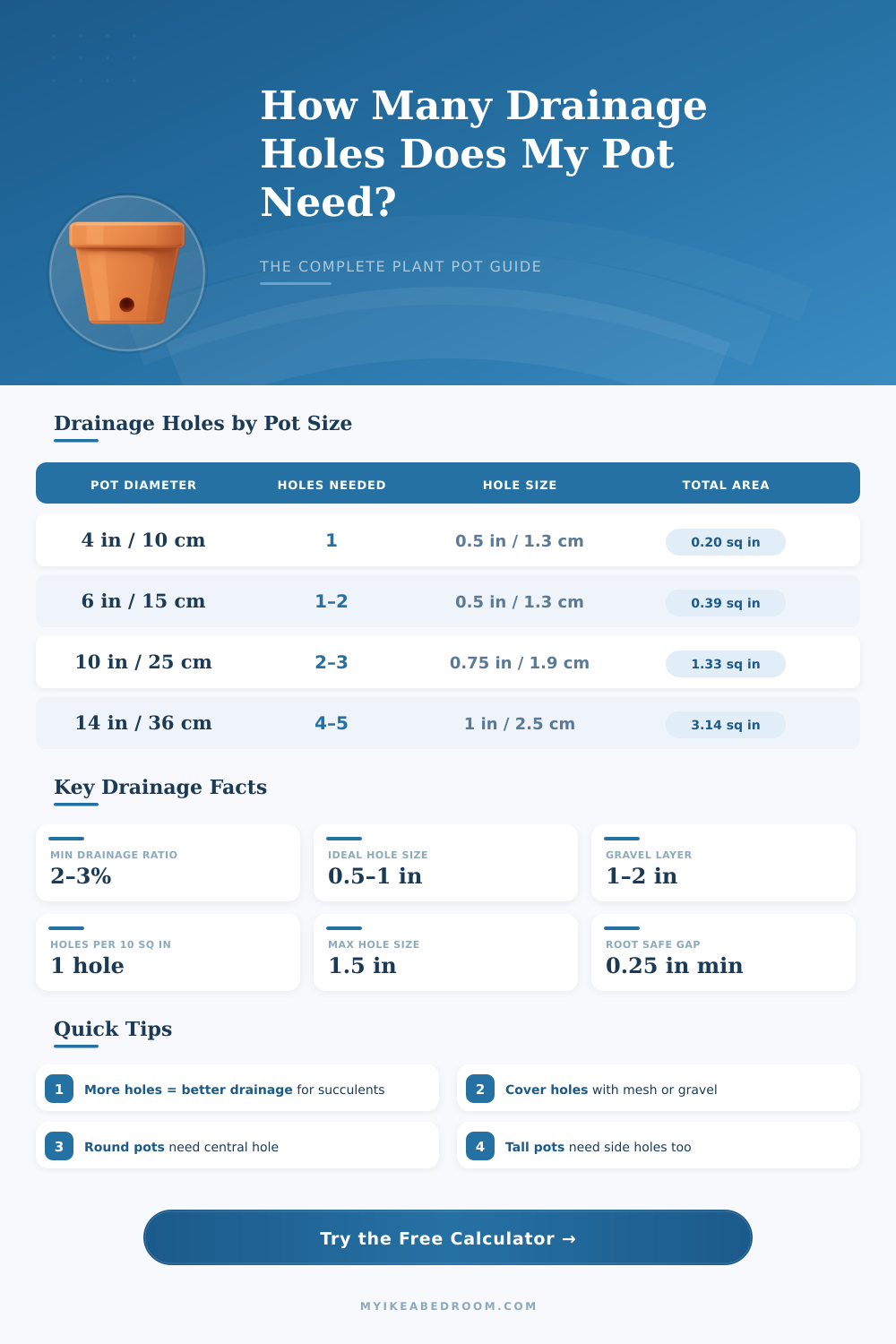
| Pot Diameter (in) | Pot Diameter (cm) | Holes Needed | Hole Size (in) | Min Total Drain Area (sq in) |
|---|---|---|---|---|
| 4 | 10 | 1 | 0.5 | 0.20 |
| 5 | 13 | 1 | 0.5 | 0.20 |
| 6 | 15 | 1–2 | 0.5 | 0.39 |
| 8 | 20 | 2 | 0.5–0.75 | 0.44 |
| 10 | 25 | 2–3 | 0.75 | 0.88 |
| 12 | 30 | 3 | 0.75–1.0 | 1.33 |
| 14 | 36 | 4 | 1.0 | 3.14 |
| 16 | 41 | 4–5 | 1.0 | 3.93 |
| 18 | 46 | 5 | 1.0–1.5 | 7.07 |
| 24 | 61 | 6–8 | 1.5 | 10.60 |
| Drainage Level | Plant Type | Ratio (%) | Example: 10 in pot (78.5 sq in) | Example: 14 in pot (154 sq in) |
|---|---|---|---|---|
| Very Slow | Ferns, Moisture Lovers | 1–2% | 0.79–1.57 sq in | 1.54–3.08 sq in |
| Standard | Herbs, Vegetables, Tropicals | 2–3% | 1.57–2.36 sq in | 3.08–4.62 sq in |
| Fast | Succulents, Trees | 3–5% | 2.36–3.93 sq in | 4.62–7.70 sq in |
| Very Fast | Orchids, Cacti | 5–7% | 3.93–5.50 sq in | 7.70–10.78 sq in |
| Hole Diameter (in) | Hole Diameter (mm) | Area Per Hole (sq in) | Area Per Hole (sq cm) | Tool Needed |
|---|---|---|---|---|
| 0.25 | 6 | 0.049 | 0.32 | Hand drill, 1/4 in bit |
| 0.375 | 10 | 0.110 | 0.71 | Drill, 3/8 in bit |
| 0.5 | 13 | 0.196 | 1.27 | Drill, 1/2 in bit |
| 0.75 | 19 | 0.442 | 2.85 | Drill, 3/4 in bit |
| 1.0 | 25 | 0.785 | 5.07 | Hole saw / spade bit |
| 1.5 | 38 | 1.767 | 11.40 | Hole saw 1.5 in |
| Setup | Pot Size | Plant Type | Holes Recommended | Hole Size |
|---|---|---|---|---|
| Windowsill herbs | 4 in round | Herbs | 1 | 0.5 in |
| Indoor succulent | 6 in round | Succulents | 2 | 0.5 in |
| Tropical houseplant | 10 in round | Tropicals | 2–3 | 0.75 in |
| Patio planter box | 24x12 in rect. | Vegetables | 6–8 | 0.75 in |
| Balcony tree pot | 18 in round | Trees | 5 | 1.0 in |
| Orchid display pot | 6 in round | Orchids | 3 | 0.5 in |
| Raised bed | 30x30 sq | Vegetables | 12–16 | 1.0 in |
Drainage in pots matters for the good growth of the plants. They require water, air and light, especially for the roots. If the pot has a hole below, you less risk watering too much.
Excess water simply spills through it Suficas lay a saucer under the pot, so that it catches the water and protect the tables.
Why Pot Drainage Is Important
Almost all decorative pots, especially from stores like IKEA, lack drainage holes. Only those that sell with a saucer usually have them. IKEA pots are not for putting plants directly in them.
From photographs online you can hardly tell whether some pot drains well.
The best way is use nursery pots with drains and put them in nice dekrotive pots without holes. Those big pots from magazines are only for show… You put a plastic draining pot inside.
Like this you can drain easily. A pot without holes helps to also protect against marks. Lifting the nursery pot for water, everything becomes simpler.
A pair of stones inside helps the tiny pot sit high, easy to shed the water and inhibit mold in the soil.
Drainage normally is not optional. Even so you can perfectly feed healthy and happy plants even in pots without drains. Only you must mind more carefully the dryness and the amount of water every time.
Species like snake plants and pothos do well without drainage, but plants sensitive to overwatering genuinely require it.
A layer of grit or broken pottery below can help the water flow. But current advice commonly warn against gravel layers, because they can create standing water. Such “drainage layer” is one from the most stubborn myths about houseplants.
Much more important is the quality of the potting soil (whether it is coarse and drains well).
For big pots, lightweight fillers like foam, plastic bottles or cracked tins help to use less soil. That lowers the weight, easy to move and also helps drainage. Some pots have tiny holes below, where you can make holes.
Any drill? Strike a nail with a hammer here, it works. Self-watering pots are for plants requiring permanent moisture.
Fabric pots also work well, because they have less risk of root rot and root-binding. For heavy plants use metal or heavy plastic trays to avoid tippingover.