📺 TV Mounting Height Calculator
Find the ideal height to mount your TV for comfortable, strain-free viewing in any room
| TV Size (diagonal) | TV Height (in) | Recommended Center (in) | Recommended Center (cm) |
|---|---|---|---|
| 32 inch | 15.7 in | 40 in (34 in floor) | 102 cm |
| 40 inch | 19.6 in | 42 in (32 in floor) | 107 cm |
| 43 inch | 21.1 in | 42 in (32 in floor) | 107 cm |
| 50 inch | 24.5 in | 44 in (32 in floor) | 112 cm |
| 55 inch | 27.0 in | 44 in (31 in floor) | 112 cm |
| 65 inch | 31.9 in | 48 in (32 in floor) | 122 cm |
| 75 inch | 36.8 in | 50 in (32 in floor) | 127 cm |
| 85 inch | 41.7 in | 54 in (33 in floor) | 137 cm |
| TV Size | Min Distance (ft) | Ideal Distance (ft) | Max Distance (ft) |
|---|---|---|---|
| 32 in | 4 ft (1.2 m) | 5 ft (1.5 m) | 6.5 ft (2 m) |
| 43 in | 5.5 ft (1.7 m) | 7 ft (2.1 m) | 9 ft (2.7 m) |
| 55 in | 7 ft (2.1 m) | 9 ft (2.7 m) | 11.5 ft (3.5 m) |
| 65 in | 8 ft (2.4 m) | 10.5 ft (3.2 m) | 13.5 ft (4.1 m) |
| 75 in | 9.5 ft (2.9 m) | 12 ft (3.7 m) | 15.5 ft (4.7 m) |
| 85 in | 10.5 ft (3.2 m) | 14 ft (4.3 m) | 17.5 ft (5.3 m) |
| Room / Position | Eye Level (in) | Ideal TV Center (in) | Floor-to-Bottom (in) |
|---|---|---|---|
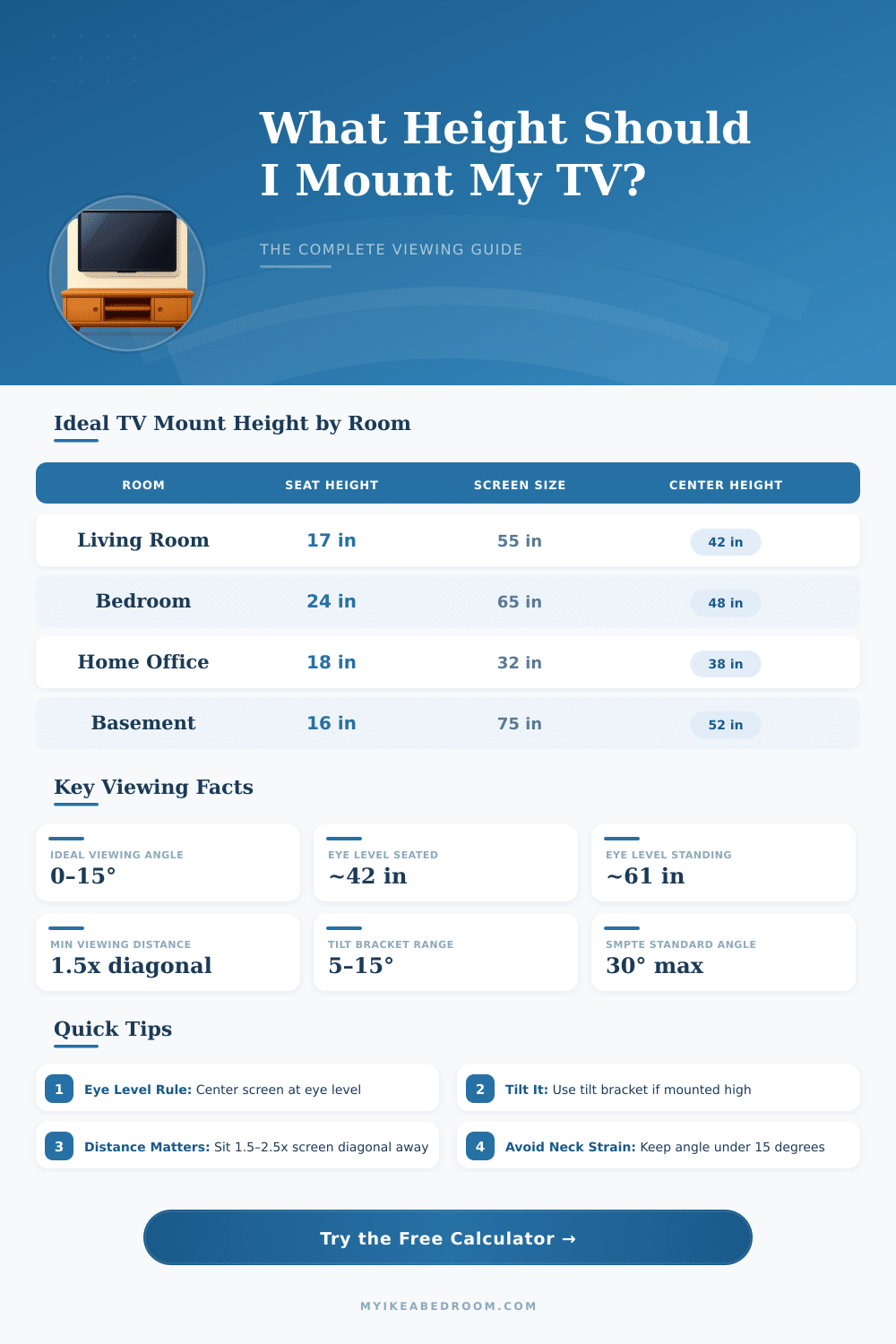
| Living Room (sofa) | 42 in | 42–44 in | 28–31 in |
| Bedroom (reclined) | 36–38 in | 48–54 in | 32–40 in |
| Home Office (chair) | 44 in | 38–42 in | 24–28 in |
| Basement Theater | 42 in | 52–60 in | 35–44 in |
| Dining / Bar (standing) | 61 in | 58–64 in | 44–50 in |
| Gym / Treadmill | 61 in | 60–68 in | 44–54 in |
| Kids Room (floor) | 24–30 in | 28–34 in | 16–20 in |
| Screen Size | Screen Height (in) | Screen Height (cm) | Half Height (in) |
|---|---|---|---|
| 32 inch | 15.7 in | 39.9 cm | 7.8 in |
| 40 inch | 19.6 in | 49.8 cm | 9.8 in |
| 43 inch | 21.1 in | 53.6 cm | 10.5 in |
| 50 inch | 24.5 in | 62.2 cm | 12.3 in |
| 55 inch | 26.9 in | 68.4 cm | 13.5 in |
| 65 inch | 31.8 in | 80.8 cm | 15.9 in |
| 75 inch | 36.8 in | 93.5 cm | 18.4 in |
| 85 inch | 41.7 in | 105.9 cm | 20.8 in |
Placing the TV at the right Mounting Height truly changes the comfort of viewing. Rule of thumb says that the center of the screen be around 42 inches above the floor. That matches with typical eye level during sitting which helps to keep everything pleasant.
Consider that 42-inch figure as a guide, not as rigid standard. One can adjust it based on the height of the sofa and the size of the screen.
How High to Mount Your TV
Typical Mounting Height for a TV is about 40 inches for most common screens. One measures it from the floor to the center of the screen. In rooms where folks usually sit, the center of the TV should rest around 36 to 42 inches from the floor, with the bottom edge at about 22 to 28 inches up.
The center of the TV should match the eye level when one sits in the usual viewing place. For that estimate, sit on the sofa and look straight forward. There should sit the center of the device.
Some mounts even offer online calculators to find the ideal Mounting Height based on any tilt angle, which is pratcial.
When the TV is placed too high or too low, the neck strain becomes a serious cause. One leans to make up for it, which causes bad posture. For instance, some person raised their TV too high and ended with pains in the head.
After lowering it by 12 inches, everything changed too much more good feeling. The goal is keep the neck in neutral state during the viewing.
For big screens the situation a bit differs. At TVs more than 90 inches, split the screen in three horizontal parts and place the viewing line at the first third from bottom is a good method. For a 50-inch TV with vertical screen height of around 24 inches, raise it so that the center reaches about 44 inches, works well, if the eye level is 44 inches from the floor.
The viewing distance also affects the choice of Mounting Height. For a 40-inch TV, sitting between 5 and 8 feet away is ideal range. The formula for the distance is the size of the TV multiplied by 1.67.
So a 75-inch model works best at 10.5 feet away.
When the TV must go above the fire, a tilt down mount can help reach the right viewing position. Tilting the screen down also helps reduce the neck tension in such cases. The Association of Motion Picture advises to keep the viewing angle under the maximum 35-degree viewing angle for more comfort.
Because each person has different height, theideal always a bit differs between people.