🪑 Fabric Upholstery Calculator
Calculate exactly how much fabric you need for any upholstery project — chairs, sofas, ottomans & more
Standard Width
Rub Count (DR)
Rub Count (DR)
Rub Count (DR)
Fabric Needed
Fabric Needed
Seat Only
Fabric Needed
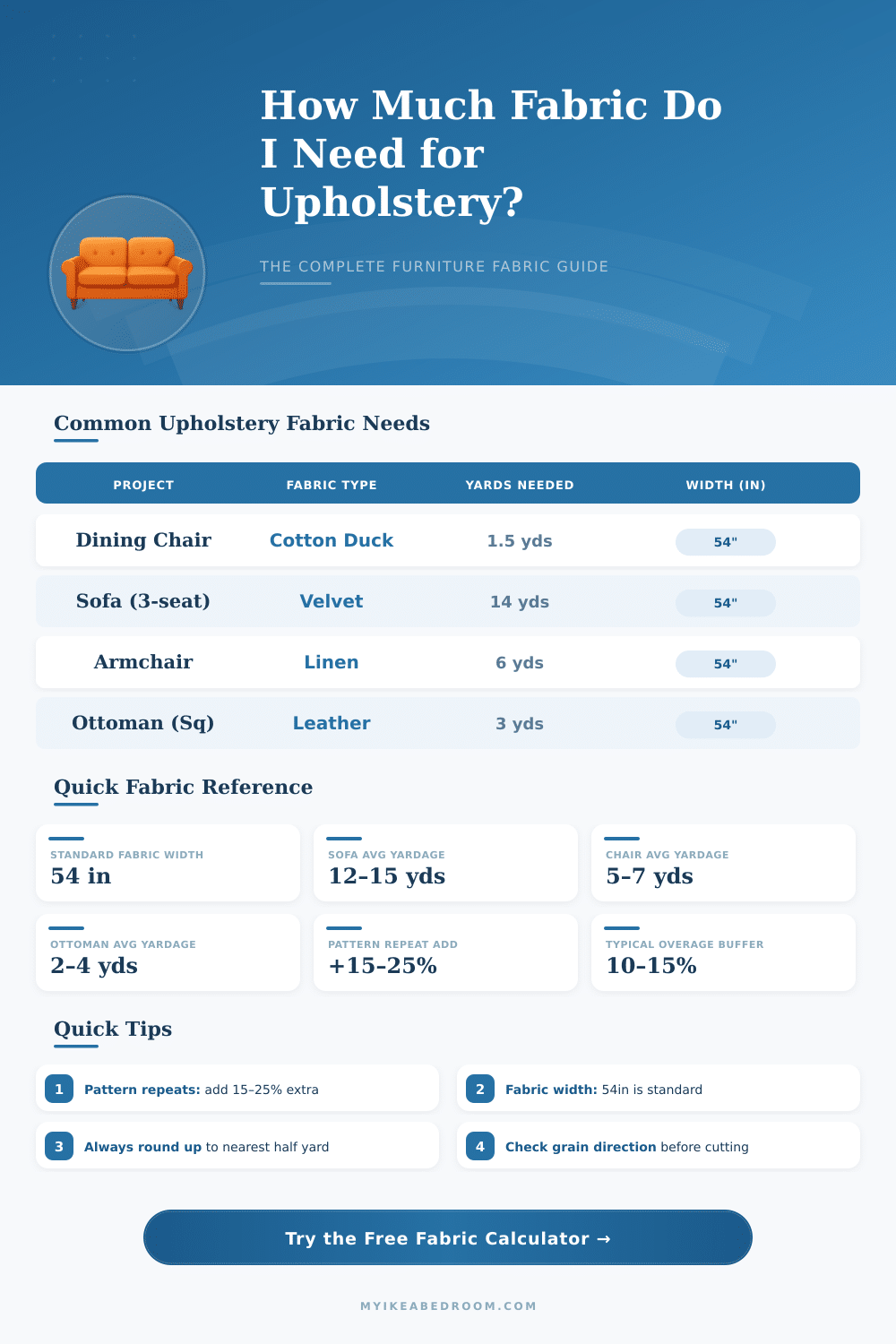
| Furniture Item | Yardage @ 54" Wide | Yardage @ 45" Wide | Notes |
|---|---|---|---|
| Sofa (3-seat, 84") | 12–15 yards | 14–18 yards | Includes seat, back, arms |
| Loveseat (2-seat, 60") | 8–11 yards | 10–13 yards | Includes seat, back, arms |
| Armchair / Club Chair | 5–7 yards | 6–8 yards | Full cover with arms |
| Dining Chair (seat only) | 0.75–1 yard | 1–1.5 yards | Seat pad replacement |
| Dining Chair (full) | 1.25–2 yards | 1.5–2.5 yards | Seat + back + legs |
| Square Ottoman (24"x24") | 1.5–2.5 yards | 2–3 yards | Includes sides |
| Bench / Window Seat | 2–3 yards | 2.5–4 yards | Top + sides |
| Headboard (Queen) | 2.5–4 yards | 3–5 yards | Front + wrap-around |
| Chaise Lounge | 8–12 yards | 10–14 yards | Full body cover |
| Bar Stool (round seat) | 0.5–0.75 yard | 0.5–1 yard | Seat only |
| Sectional (4 pieces) | 18–25 yards | 22–30 yards | Varies by configuration |
| Pattern Repeat Size | Extra Fabric Needed | Waste % | Recommendation |
|---|---|---|---|
| No Pattern (Solid) | 0 extra yards | 0% | Order calculated amount only |
| Small (3 in repeat) | +0.5–1 yard | ~5–8% | Add 1 yard to base yardage |
| Medium (6 in repeat) | +1–2 yards | ~10–15% | Add 10% to base yardage |
| Large (12 in repeat) | +2–3 yards | ~15–20% | Add 15% to base yardage |
| Extra Large (18 in repeat) | +3–5 yards | ~20–25% | Add 20% to base yardage |
| Oversized (24 in repeat) | +4–7 yards | ~25–35% | Add 25–30% to base yardage |
| Fabric Width | Width (cm) | Yards per Linear Meter | Best Use |
|---|---|---|---|
| 36 in | 91 cm | 1.09 yd/m | Decorative accents, pillows |
| 45 in | 114 cm | 1.09 yd/m | Dining chairs, cushions |
| 54 in | 137 cm | 1.09 yd/m | Standard upholstery (most common) |
| 60 in | 152 cm | 1.09 yd/m | Sofas, large pieces |
| 72 in | 183 cm | 1.09 yd/m | Sectionals, commercial use |
Fabric for upholstery, that covers furniture, is also strong and nice to look at. One finds it knitted, woven or printed, from almost every fiber or mix, that one imagines. It protects against wear, stands against rubbing and cleans easily without problems.
Here why it became that much common for sofas chairs, cushions, curtains and various homemade projects. For more lightweight upholstery materials? They shine, when one works with cushions, bedding or something creative away from usual furniture uses.
How to Choose Upholstery Fabric
The wholesale range of upholstery fabric here truly beats expectations. One finds brocade, velvet, chenille, linen, denim, cotton blends, natural fibers, materials fit for outside and leather imitation or real leather. Moreover there are special mixes, that give comfort without losing reliability.
Cotton stays popular with customers. It is soft to touch, washable and easy to work with. If one wants something more sturdy and natural, fibers like linen or cotton give exactly that feeling.
Designs matter a lot. When browsing, one sees paisley patterns, flowery images, sporting themes, baby designs, the list does not end. The most many stores allow to filter according to type of fabric, colour, pattern and width, what removes a lot of confusion and helps focus.
Choosing the right fabric matters much more, than many think. On any stuffed object, the material is the first thing, what eyes notice, when one judges quality and style, and it suffers dirt and damages most soon. Many start with colour, what makes sense.
Even so, reliability and cleaning ease deserve same attention in you’re choice. Material, that resists rubbing and cleans without problems, deserves the extra effort to find.
If the main issue is reliability, heavy vinyl commonly leads. It is that, what one uses for restaurants, booths and arcade machines. Synthetic micro fiber also protects thanks to its very good structure.
Canvas adds similar strength. Denser materials than regular canvas; duck, denim, all work well for upholstery usage.
Away from usual furniture uses, upholstery fabric opens creative chances. One can sew reusable shopping bags or even a recovered blanket. Here is a fun money saving idea: buy curtains and recycle them for upholstery on little bits.
Slipcovers work well, especially because one can toss them in the washing machine, when they need freshening. Dense natural fabric like linen and cotton works surprisingly well for such covers.
Price, weight, colour and pattern all affect the final decision. Designer materials can cost more than hundred dollars each yard. Visiting localupholstery stores sometimes gives better price…
They have access to commercial supplies, that cost less.